From Hive to Healing: How Medical-Grade Honey Is Changing the Wound-Care Conversation
Picture this: a clinician opens a wound-care cart and reaches for something associated with kitchens, tea, and breakfast tables for thousands of years—honey.
Of course, this is not the jar sitting next to the toaster.
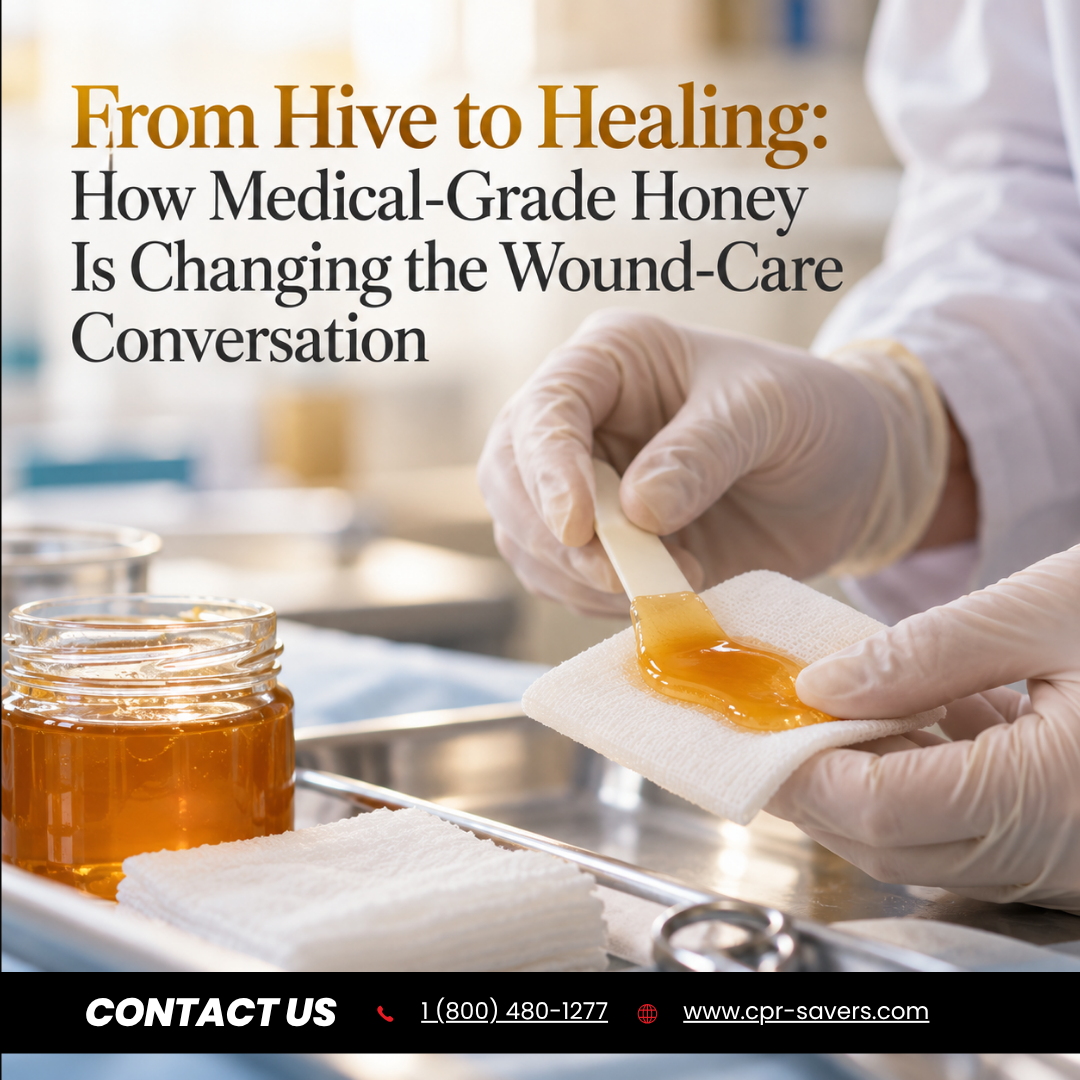
Modern medical-grade honey is specially prepared for healthcare applications and incorporated into products designed to support wound management. It is a fascinating example of how an ingredient with ancient roots can find a place in modern clinical care.
Today, medical-grade honey is available in different formats, including gels and honey-infused dressings. That gives healthcare professionals another question to consider when organizing wound-care supplies: Which format makes the most sense for the situation?
First, What Makes “Medical-Grade” Honey Different?
One important distinction is that wound-care products use medical-grade honey, not ordinary grocery-store honey.
Products intended for wound care are manufactured specifically for medical use and provided in controlled formulations and delivery systems. Medical-grade honey products may be designed to help maintain an appropriately moist wound environment, support autolytic debridement, manage odor, and provide antimicrobial support.
That combination makes honey surprisingly interesting from a wound-care perspective.
Quick Trivia: Honey and Wound Care Aren’t a New Combination
Honey’s connection with wound care goes back centuries. What has changed dramatically is how it is prepared and delivered.
Modern healthcare does not depend on simply applying household honey to an injury. Instead, manufacturers can incorporate medical-grade honey into standardized wound-care products that are easier for clinicians to select, apply, and incorporate into an established treatment plan.
Think of it as an old idea meeting modern wound-care engineering.
The Dressing Question: Gel or Tulle?
Imagine a fictional wound-care nurse named Maria preparing supplies for two patients.
The first patient needs a dressing that can be placed directly over the wound while providing a gentle interface between the wound and the secondary dressing.
The second situation calls for a versatile gel that can be applied where needed as part of the prescribed wound-management plan.
Both involve medical-grade honey—but the delivery format is different.
That is where products such as L-Mesitran Tulle and L-Mesitran Soft enter the picture.
Option One: Honey Built Into the Dressing
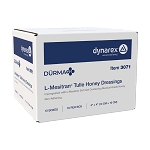
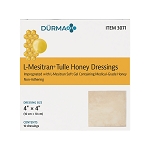
Dürma+ L-Mesitran Tulle combines a non-adhering mesh dressing with 40% medical-grade honey gel.
The mesh format is designed to provide a gentle wound-contact layer while the honey formulation supports moisture balance and wound management. According to the product information, it may be appropriate for various acute and chronic wounds, including burns, ulcers, and donor sites when clinically indicated.
For a caregiver or clinician, the appeal is easy to understand: instead of handling the gel and wound-contact layer as completely separate components, the honey is already incorporated into the mesh dressing.
That can make the product particularly interesting when building an organized wound-care system.
You can explore Dynarex L-Mesitran Tulle at CPR Savers:
View Dynarex L-Mesitran Tulle at CPR Savers
Option Two: A Versatile Medical-Grade Honey Gel
Sometimes flexibility is the priority.
L-Mesitran Soft is a wound gel containing 40% medical-grade honey and is formulated with additional ingredients including hypoallergenic lanolin and vitamins C and E.
Its gel format gives clinicians another way to incorporate medical-grade honey into a wound-care plan. It is designed to support cleansing and autolytic debridement while helping maintain a balanced, moist environment.
Products like this can be particularly useful because wound care is rarely a one-product situation.
There may be a primary wound-contact product, a secondary dressing, something to secure the dressing, skin-protection products, gloves, cleansing supplies, and disposal materials—all working together as a system.
You can find Dynarex L-Mesitran Soft 1.75 oz. Tube at CPR Savers:
View Dynarex L-Mesitran Soft at CPR Savers
Wound Care Is More Than Covering an Injury
One of the easiest mistakes when thinking about wound care is picturing a dressing as nothing more than a cover.
Modern wound management is much more deliberate.
Healthcare professionals may consider factors such as wound type, drainage, surrounding skin, dressing-change frequency, pressure or friction, and the overall clinical condition of the patient.
That means the most interesting part of medical-grade honey may not simply be what it contains.
It is the variety of ways it can be incorporated into an organized wound-care approach.
A mesh dressing and a gel can contain the same percentage of medical-grade honey while serving different practical purposes.
A Sweet Ingredient With a Serious Job
There is something undeniably memorable about honey appearing in a modern wound-care cabinet.
But medical-grade honey products are not about novelty. They demonstrate how healthcare continues to take familiar materials, study their useful properties, and develop specialized products around them.
From a honey-infused mesh dressing to a versatile wound gel, the format can matter almost as much as the ingredient itself.
And perhaps that is the real lesson.
Good wound care is rarely about finding one “magic” product. It is about selecting the appropriate tools, understanding how they work together, and following the patient’s established care plan.
Medical-grade honey may have ancient roots—but its role in modern wound care is anything but old-fashioned.
Wound-care products should be selected and used according to product instructions and appropriate clinical guidance, particularly for serious, chronic, infected, surgical, or otherwise complex wounds.
Tagged Products