The Front Door Test: Is Your Home Ready for Recovery?
The hospital room had a button for everything.
Need the bed raised? Press a button. Need help walking? A nurse was nearby. Need oxygen adjusted, a dressing changed, or equipment checked? Someone trained to handle it was only a few steps away.
Then the discharge papers are signed.
The car pulls into the driveway, the front door opens—and suddenly recovery has a completely different address.
For many patients and caregivers, the first days at home are when the practical questions begin. Where should the oxygen equipment go? Are there enough wound-care supplies for the next dressing change? Can the patient safely get from the bedroom to the bathroom? Who knows what to do if a device alarms?
The transition from hospital to home is not simply about bringing a patient home. It is about making the home ready for the patient.
Before the Patient Arrives, Walk Through the House
Imagine a fictional patient named Daniel coming home after a hospital stay.
Before Daniel even gets out of the car, his family can perform what we’ll call the Front Door Test: follow the exact path he will take during an ordinary day.
Front door. Bedroom. Bathroom. Kitchen. Favorite chair.
That familiar route may suddenly contain obstacles. A loose rug becomes a tripping hazard. A low couch becomes difficult to stand from. A narrow pathway that was never noticeable before may be challenging with a walker or wheelchair.
Mobility equipment should fit both the patient and the environment. CPR Savers carries a selection of [wheelchairs and transport options] designed for different mobility needs. Explore Wheelchairs at CPR Savers CPR Savers also offers a broader range of [mobility and immobilization equipment], including walkers, wheelchairs, transfer equipment, and related products. Browse Mobility & Immobilization Equipment CPR Savers
The goal is not to fill the house with equipment. It is to identify the places where everyday movement may require more support.
Build a Breathing Station, Not a Pile of Equipment
For someone returning home with respiratory equipment, organization can make a complicated routine feel much more manageable.
Instead of scattering tubing, cannulas, accessories, and backup supplies throughout the room, create a dedicated respiratory station.
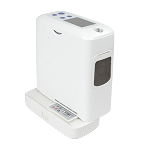
CPR Savers carries medical oxygen equipment including oxygen tanks, masks and cannulas, regulators, accessories, storage products, and concentrators. Explore Medical Oxygen Supplies Its current oxygen concentrator selection includes both stationary and portable options. Browse Oxygen Concentrators CPR Savers
Think about the routine around the equipment rather than simply the equipment itself. Can the patient reach what they need comfortably? Does the caregiver know which tubing goes where? Where are backup supplies stored? If the equipment is portable, is there a plan for leaving the house?
Patients should follow their prescribed oxygen settings and discharge instructions rather than changing therapy settings on their own.
And when suction equipment is part of the care plan, supplies can disappear surprisingly quickly. Keeping replacement tubing, canisters, and other prescribed components together can simplify the routine. CPR Savers carries a range of [portable medical suction units and accessories], including powered and manual options. Browse Portable Suction Units CPR Savers
Turn Wound Care Into a Routine
At 8:00 p.m., “we need to change the dressing” should not become a scavenger hunt.
A simple wound-care station can keep commonly used supplies organized in one clean location: prescribed dressings, gauze, tape, gloves, cleansing supplies, and disposal materials.
The important question is not only “Do we have dressings?”
It is “Do we have everything needed for the complete dressing change?”
That may mean several different products used in sequence. Preparing complete sets ahead of time can make the process less stressful for a caregiver learning a new routine.
CPR Savers offers first aid and wound-care supplies across its catalog, including gauze, non-stick dressings, antiseptic products, tapes, gloves, and other useful supplies. Its [CPR Savers Shop First Aid Kit], for example, contains gauze, bandages, tape, eye wash, gloves, cold packs, and other first aid essentials. View the CPR Savers Shop First Aid Kit CPR Savers
For a surgical or ongoing wound, however, the discharge plan should determine which products are appropriate—not the contents of a general first aid kit.
Practice Before You Need to Be Confident
One of the hardest parts of home recovery is that caregivers may be learning unfamiliar skills while also worrying about someone they love.
That is where education before discharge becomes incredibly valuable.
For example, tracheostomy care can involve suctioning, dressing changes, stoma care, tube management, and other steps. CPR Savers carries [tracheostomy training simulators] designed for hands-on education, and some models allow learners to practice suctioning, dressing changes, cuff inflation, and related care skills. Explore Tracheostomy Training Simulators CPR Savers
Training is not about memorizing a perfect routine. It is about reducing the number of surprises when the routine becomes real.
Recovery Is a System, Not a Shopping List
The most useful question during the first days home may be surprisingly simple:
What part of today was harder than expected?
Maybe getting into the shower was difficult. Maybe oxygen tubing kept catching on furniture. Maybe wound supplies ran low faster than expected. Maybe the caregiver realized they were unsure about a procedure.
Those discoveries are not failures. They are information.
Home recovery works best when equipment, supplies, the physical environment, caregiver education, and the patient’s clinical instructions work together.
Because when recovery comes through the front door, the goal is not to recreate a hospital room.
It is to create a home where healing can actually happen.
Tagged Products


_thumbnail.png)