When the Unexpected Happens: Why a Survival Kit Can Make All the Difference
Picture this: the power suddenly goes out. Cell service becomes unreliable. Roads are blocked, stores are closed, and an emergency alert tells everyone in your building to stay indoors. Then the questions begin: Do we have enough water? Where are the flashlights? What if someone gets hurt? How long could we stay here if we had to?
Emergencies rarely arrive with a convenient warning. Storms, wildfires, earthquakes, outages, and other emergencies can quickly make basic supplies matter. That is why a well-planned survival kit is more than a box of emergency gear. It is a practical way to turn uncertainty into action.
Preparedness Starts Before the Emergency
During an emergency, the worst time to begin searching for supplies is after you already need them. A survival kit keeps essential items together, organized, and ready to use.
For a household, that may mean food, water, emergency blankets, lighting, first aid supplies, and basic tools in one easy-to-reach location. A vehicle kit may focus on roadside emergencies, while a workplace or school may need supplies for much larger groups.
The right kit starts with one question: What situation are you preparing for?
The 72-Hour Mindset
Many preparedness plans focus on having enough essential supplies to manage basic needs for several days. A 72-hour survival kit can help bridge the gap between the beginning of an emergency and the return of normal services or outside assistance.
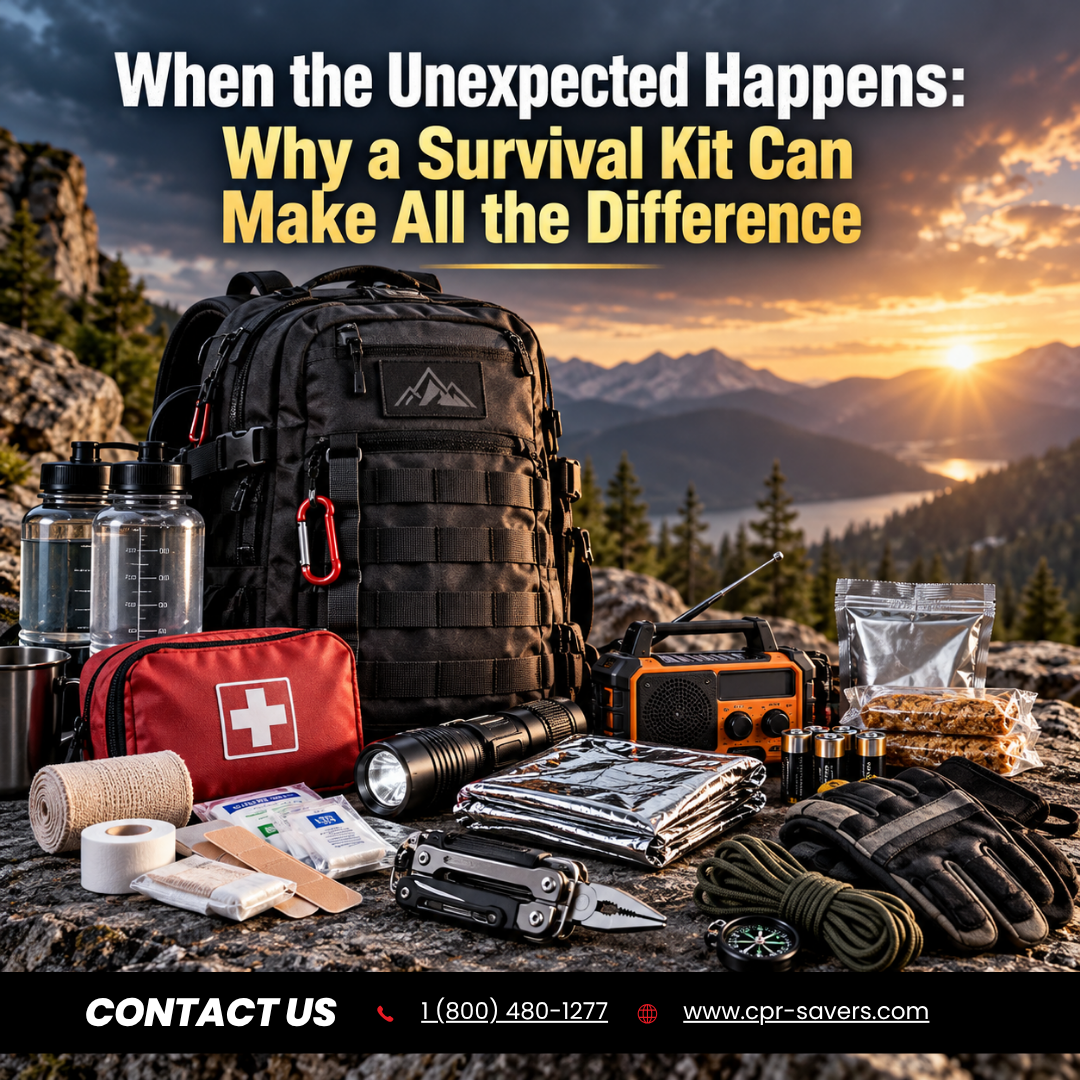
Useful supplies may include food, drinking water, water purification products, flashlights, batteries, emergency blankets, sanitation supplies, first aid materials, whistles, masks, gloves, and multipurpose tools.
Individually, these items may seem simple. Together, they solve a surprising number of problems. A flashlight matters when the power is out. An emergency blanket helps retain warmth. A whistle can attract attention. Food and water become more important with every passing hour. First aid supplies help address injuries when professional care may not be immediately available.
When Leaving Isn’t the Safest Option
Emergency planning is not only about evacuation.
In some situations, people may be directed to shelter in place—remaining inside a home, workplace, school, or facility rather than immediately traveling outside. Severe weather, hazardous outdoor conditions, nearby incidents, or transportation disruptions can make staying put the safer option for a period of time.
Shelter-in-place planning changes the scale of preparedness. The question becomes, “What do we need to support everyone here?”
Larger shelter-in-place kits can organize emergency food and water, lighting, sanitation materials, first aid supplies, blankets, protective equipment, tools, and other essentials in one coordinated system. Rolling containers can make group supplies easier to organize and move.
Preparedness for Home, Work, School, and the Road
There is no single survival kit that fits every environment.
A family may want a portable backpack that can be grabbed quickly. A business may need supplies for employees if severe weather prevents people from leaving. Schools may need plans for protecting students and staff during an extended emergency. Drivers may want a compact kit for breakdowns, road closures, or being stranded away from immediate assistance.
CPR Savers offers survival kits and preparedness supplies for many of these situations, including individual emergency packs, survival backpacks, emergency food and water, shelter supplies, lighting, communication gear, first aid products, survival tools, and larger shelter-in-place solutions.
A Kit Is Only the Beginning
Buying a survival kit is an excellent first step, but preparedness works best when everyone knows where the supplies are and how they will be used.
Check kits periodically. Replace expired food, water, batteries, medications, or other time-sensitive supplies. Make sure flashlights work. Consider the needs of children, older adults, pets, and anyone with specific medical requirements. Businesses and schools should make sure key staff know where supplies are stored.
Be Ready Before “What If?” Becomes “What Now?”
Preparedness is easy to postpone because emergencies always feel like something that will happen later—until they do.
A survival kit cannot prevent a storm, outage, evacuation, or shelter-in-place emergency. What it can do is provide useful resources when normal routines suddenly disappear.
Explore CPR Savers’ survival kits, shelter-in-place supplies, emergency food and water, lighting, first aid products, and preparedness gear to build a plan that fits your home, vehicle, workplace, school, or organization.
Because when the unexpected happens, one of the most valuable advantages is knowing you prepared before you needed to.
Tagged Products